
As we head into a new year, a lot of people start thinking about the spaces they want to create. If a round space has been on your radar, 2026 is shaping up to be a great year to start planning.
Round spaces have always done a lot of things well: they’re strong, energy-efficient, and naturally welcoming. But what we’re seeing more of now is people using round design in thoughtful new ways, for family homes, rentals, schools, retreats, and even small communities.
Below, we’re sharing some of the round space design trends we’re seeing for 2026 and how they’re showing up in real projects. We hope this gives you a little inspiration (and a few helpful things to consider!) as you plan what’s next.
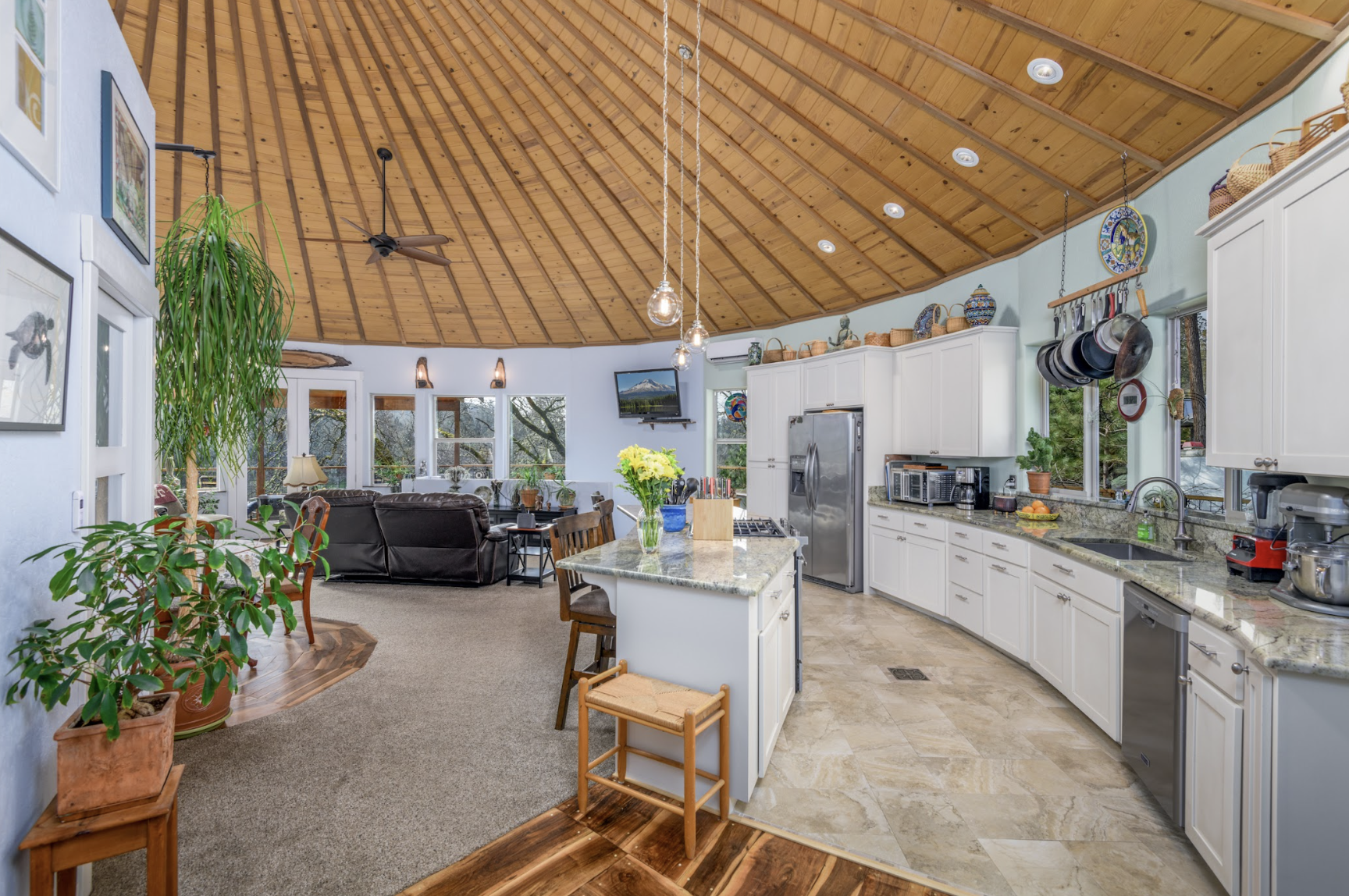
Trend #1: Biophilic Design & Natural Materials
One of the biggest design shifts we’re seeing for 2026 is a deeper focus on creating spaces that feel connected to nature. This idea (often called biophilic design) is all about using natural light and materials to create healthier, more calming environments. And round spaces are well-suited for this approach.
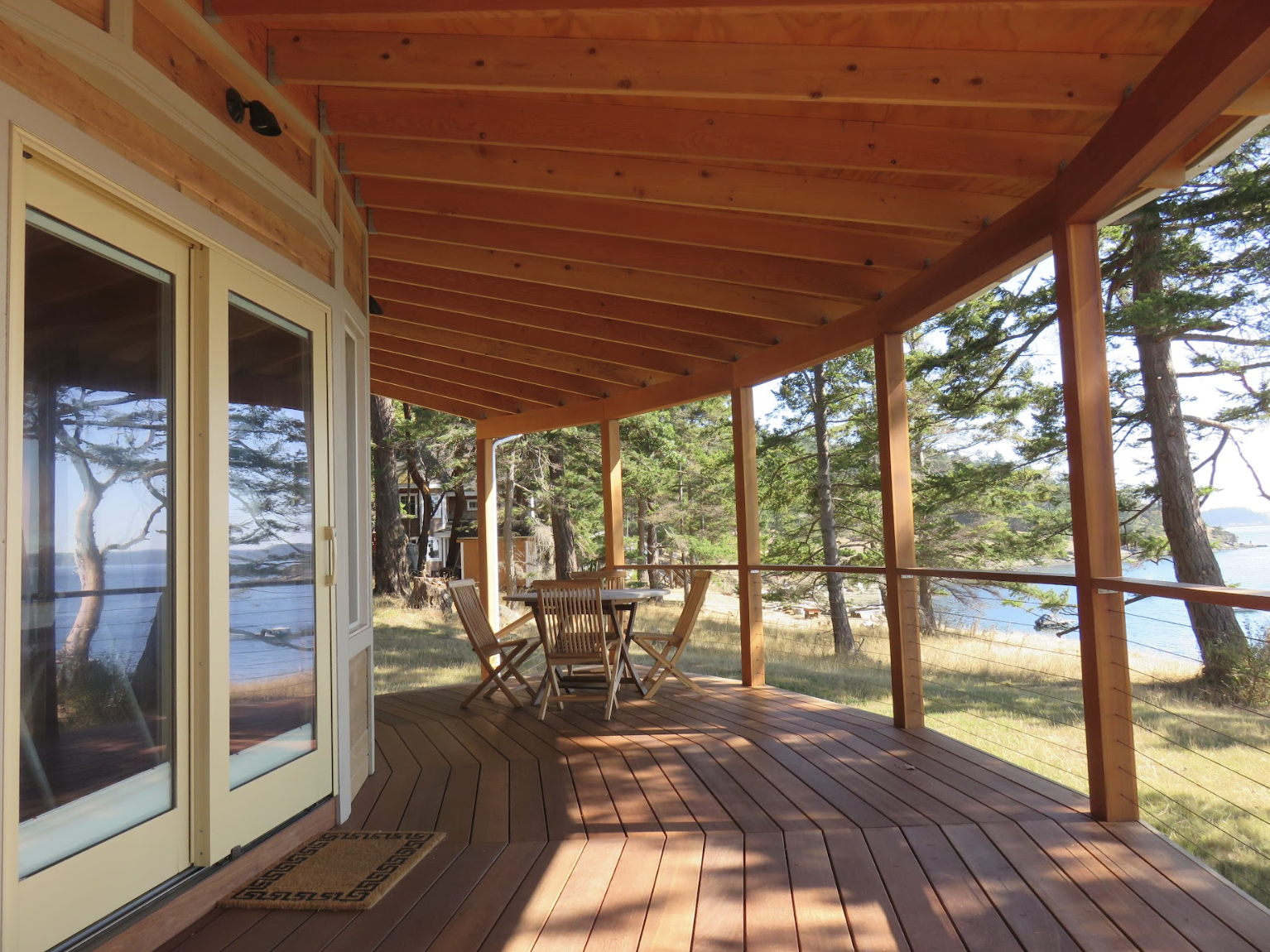
With their curved walls and open layouts, round spaces encourage better flow, making it easy to blur the line between inside and outside. Large windows, glass doors, and skylights help bring in daylight and showcase the surrounding landscape, whether that’s forest, mountains, water, or wide-open skies.
We’re also seeing more people lean into natural finishes that highlight the warmth of the structure itself. Think:
Exposed wood ceilings and beams
Earthy, neutral color palettes
Stone or wood flooring
Simple interiors that let the architecture shine
These choices create spaces that feel more welcoming for everyday living, learning, or hosting guests. For homeowners, that might mean a peaceful place to unwind. For schools or retreat centers, it can mean environments that support creativity and connection.
This trend is a great reminder that sometimes the best design choice is letting the natural setting and beautiful materials take center stage.
Trend #2: Multi-Use Interiors
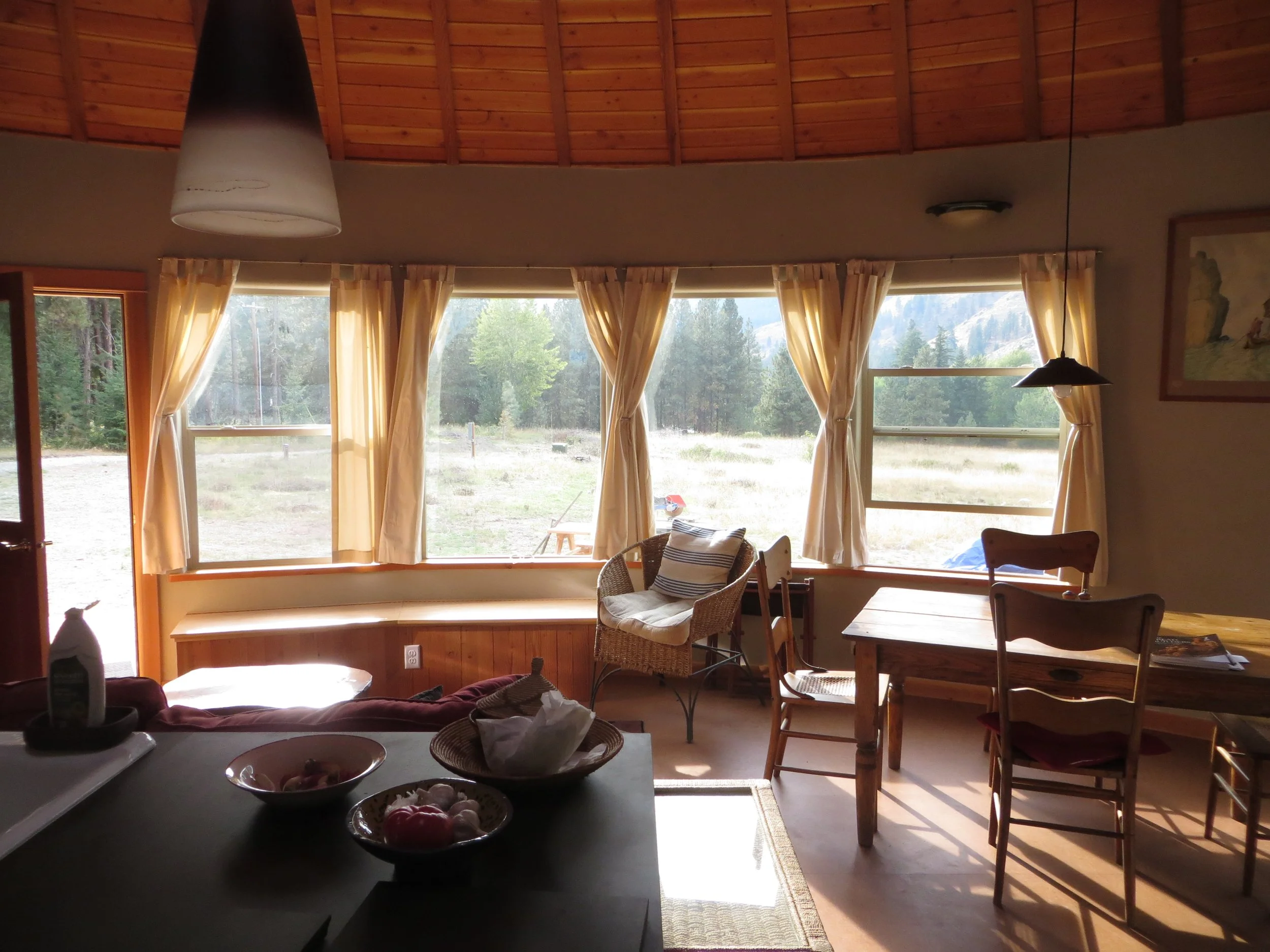
Another big trend for 2026 is designing spaces that can serve more than one purpose. Homes double as workspaces, retreats can host workshops, and rental properties need to feel comfortable for different guests.
Round spaces are perfect for this kind of adaptability. Their open floor plans make it easy to create spaces that work together while still feeling organized, even without traditional walls dividing every area.
Here are a few ways people are designing round spaces to support flexible living:
Open living areas that can shift between daily life, gatherings, or classes
Lofted sleeping spaces that free up more usable space below
Movable furniture or light partitions to adjust layouts as needs change
Connected kitchen and dining areas that keep everyone part of the same space
These interior ideas are great for anyone who needs a space that can evolve over time. Instead of designing for just one use, more people are choosing round spaces that can adapt as their lives and projects grow.
Trend #3: Skylights, Vaulted Ceilings & Natural Light
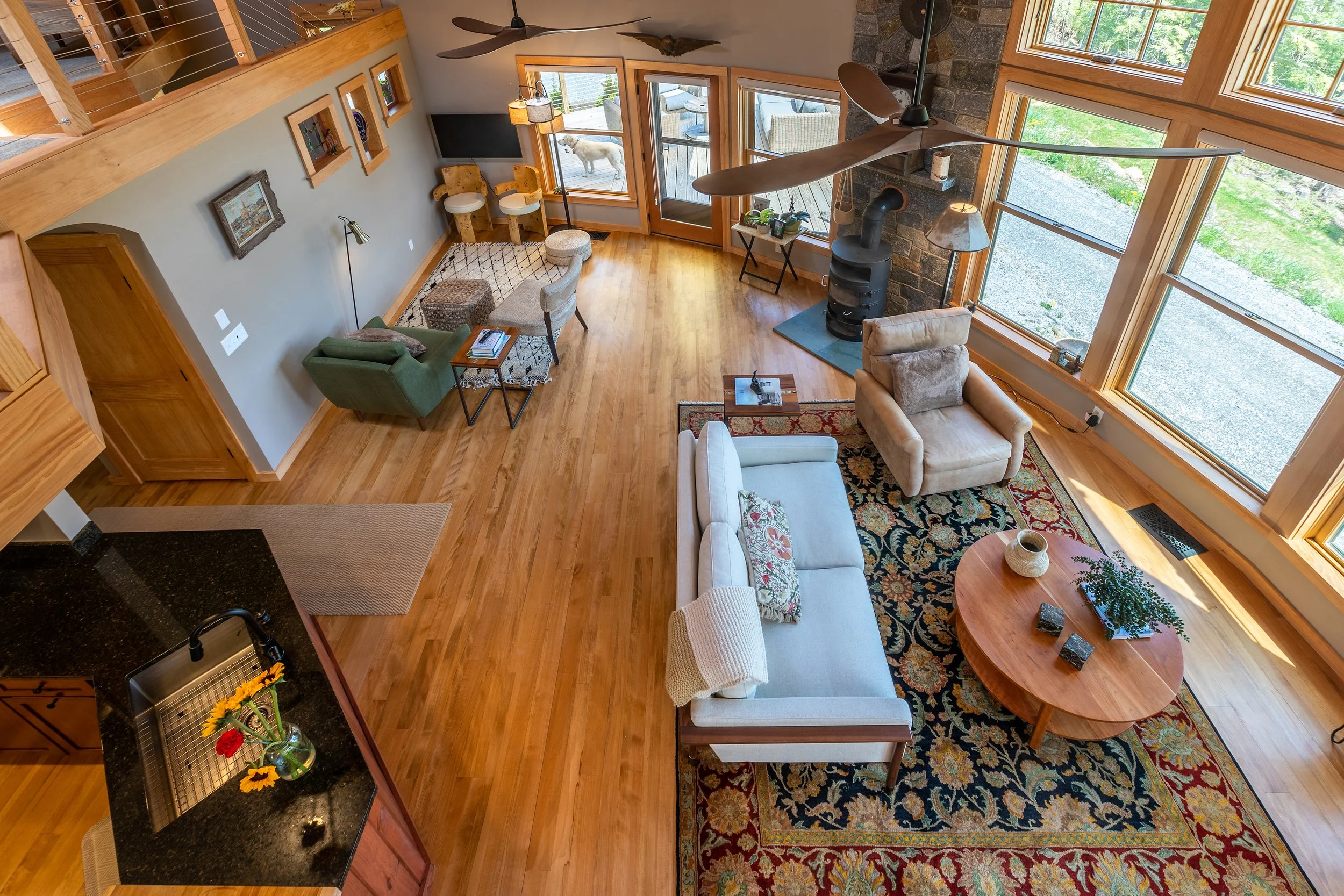
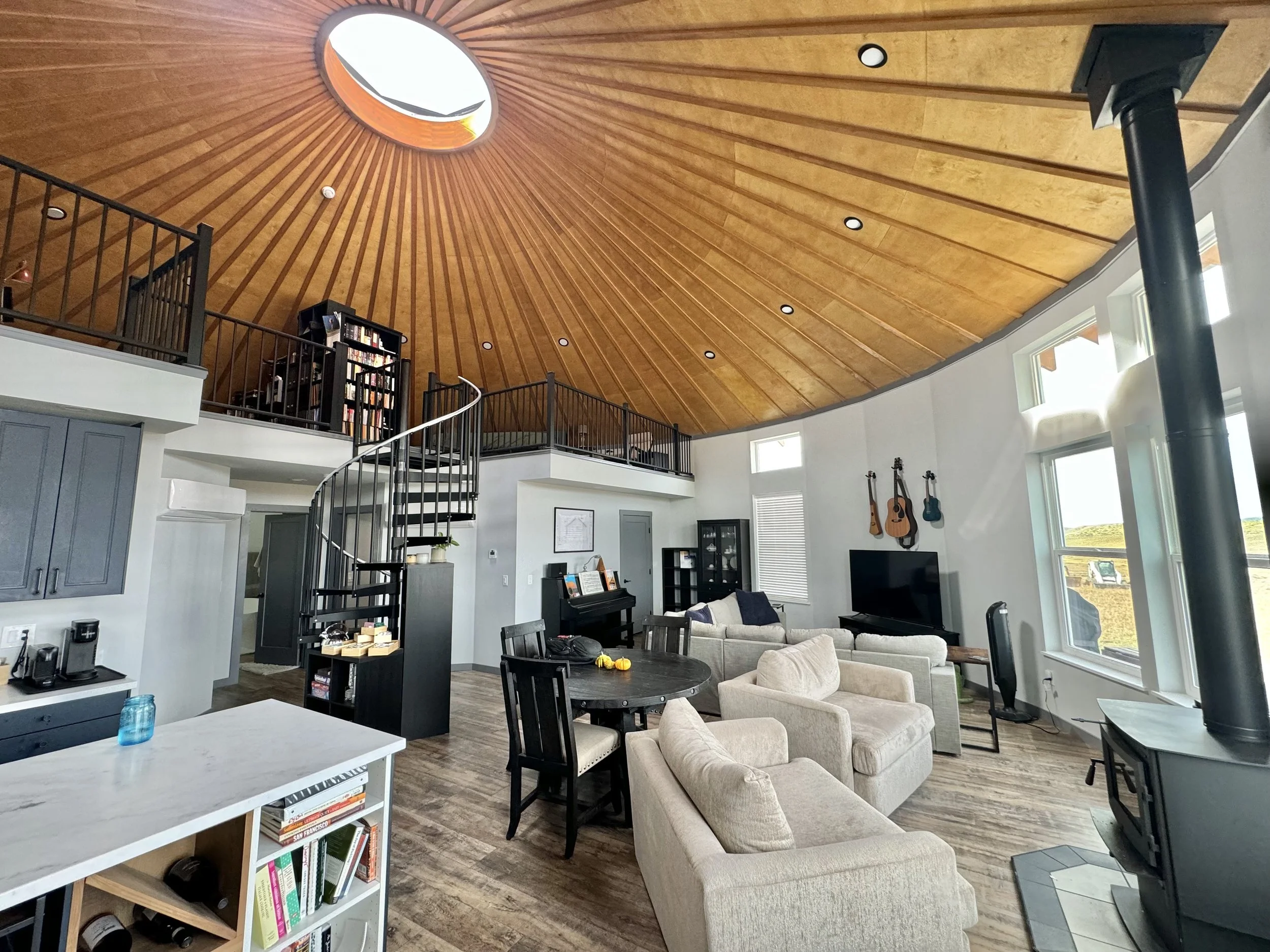
Light plays a huge role in how a space feels, and in 2026, more people are making natural light a top priority. Round spaces already have an airy feel, and adding features that bring light in from above and around the space takes that feeling even further.
Skylights are becoming a favorite feature in round space designs, not just because they brighten the room, but because they create a visual connection to the sky and passing daylight. Combined with vaulted ceilings, they make even modest-sized homes feel spacious.
We’re seeing:
Central skylights that bring sunlight deep into the heart of the space
Higher wall heights and vaulted ceilings that add openness
Well-placed windows and glass doors that frame views and extend living areas outdoors
Bright interior finishes that reflect light and keep spaces feeling open
These design choices support wellness, improve mood, and reduce the need for artificial lighting. For homes, schools, and retreat spaces especially, that natural brightness can make a big difference in how welcoming the space feels.
Trend #4: Energy-Efficient Systems
Sustainability continues to be a major focus in home design this year, with more people building with long-term efficiency in mind. That means thinking not just about how a space looks, but how it performs.
Round spaces have a built-in advantage here. Their circular shape reduces exposed surface area, keeping temperatures more stable and heating and cooling more efficient. When paired with modern insulation and thoughtful ventilation, round spaces can be surprisingly comfortable year-round.
We’re also seeing growing interest in designs that are off-grid-ready or low-impact, especially for remote properties and eco-communities. Many people are planning for:
Solar power systems and battery storage
High-performance insulation and windows
Efficient heating options, like radiant floor systems or heat pumps
Water-saving fixtures and rainwater collection (where allowed)
For many 2026 projects, energy efficiency is part of the design from day one.
Trend #5: Purpose-Built Designs
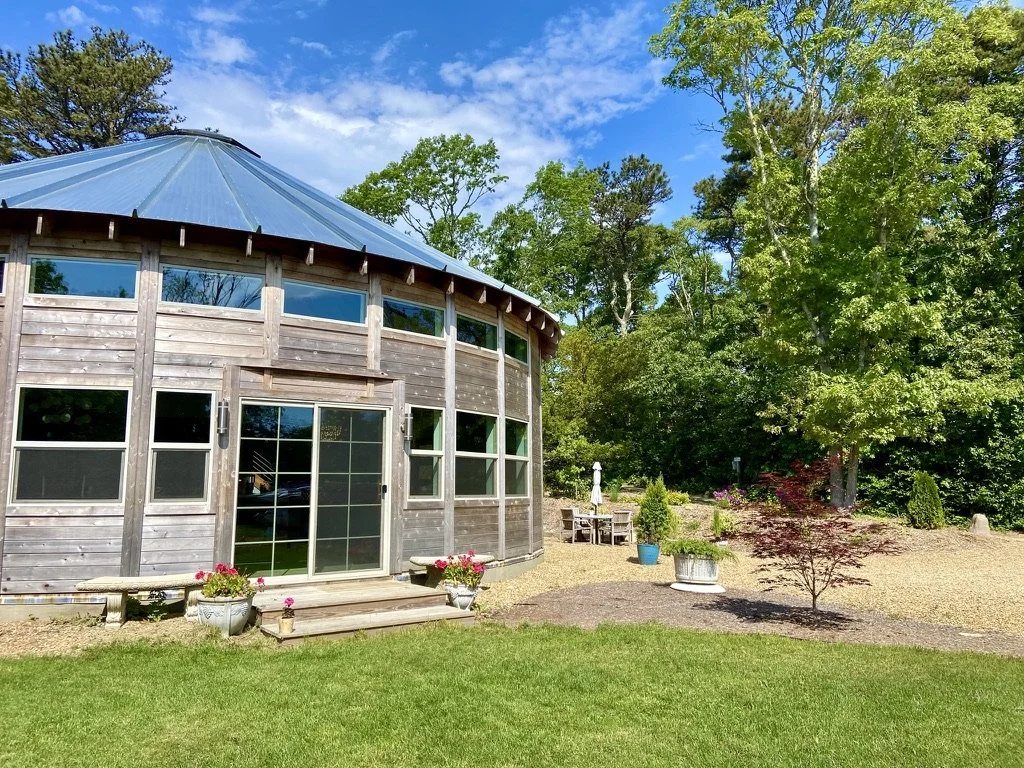
Instead of designing a general space and figuring out how to use it later, more people in 2026 are starting with a clear purpose in mind.
Because round spaces are so flexible, they can be tailored for different needs while still using the same strong structure. That means layouts, features, and finishes can all be chosen to support a specific goal from the beginning.
Our team has seen:
Rental-focused layouts that maximize visual appeal for guests
Educational spaces designed for group work and easy supervision
Wellness studios with open floor plans and calming acoustics
Family homes that prioritize shared living areas
Multi-unit projects where consistency matters across buildings
Those planning a build in 2026 will want to think about how the space will be used early on.
Trend #6: Community-Focused Layouts
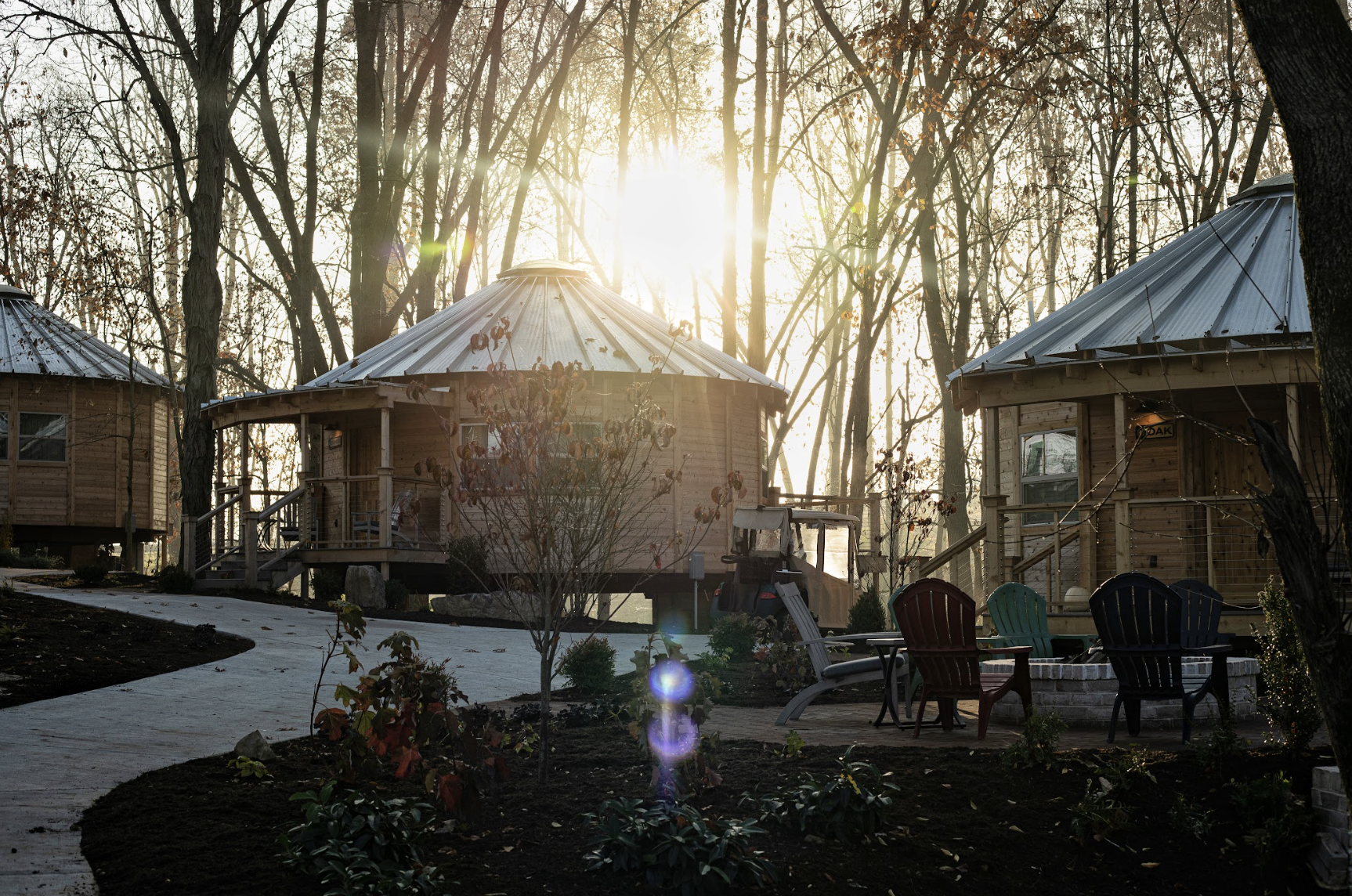
Another design trend gaining momentum for 2026 is thinking beyond just one building. Instead of a standalone structure, more projects are being designed as clusters of round spaces connected by shared outdoor areas.
This approach is popular for:
Retreat centers and wellness campuses
Eco-communities and cohousing developments
Resort-style rental properties
Educational campuses and schools
By arranging round spaces around common gathering spaces (like courtyards, gardens, or shared pavilions), you can create a strong sense of community while still offering privacy. The circular design also gives these developments a cohesive look that blends with the landscape.
From a practical standpoint, clustered layouts can also simplify infrastructure planning, making it easier to share utilities and manage access roads.
Planning Your 2026 Round Space
The design trends we’re seeing for 2026 all point to the same idea: people want spaces that are thoughtful, flexible, and built to support real life. Round spaces fit perfectly into that vision and a sense of flow that’s hard to replicate with traditional layouts.
Now is a great time to explore your options and talk through what kind of space would best support your goals. Early planning gives you more time to refine your design and confidently move into your build.
Download our free guide to learn more about layouts and the build process, or reach out to talk through your ideas. We’d love to help you plan your round space for 2026!
And if you’d like to talk through your ideas, our team would love to help you plan the next steps for your project!
